Australia is expected to commit $600 million to a new regional effort to disrupt the rapidly expanding illicit drug trade across the Pacific, as authorities confront record-scale cocaine and methamphetamine trafficking into Australian markets.
Prime Minister Anthony Albanese is due to announce the multi-year investment at the Pacific Islands Forum in Palau, where regional leaders are considering the “Waqa Moana” initiative. The proposal aims to improve surveillance across the Pacific Ocean and strengthen the ability of police agencies to detect and intercept drug shipments.
Surveillance and policing at the centre of the plan
The package is expected to fund increased aerial surveillance over the region, along with additional training and operational support for Pacific police forces. It will also seek to improve coordination between law enforcement agencies spread across a vast maritime area that is difficult to monitor.
A further element would expand Australian Federal Police cooperation with authorities in South and Central America, allowing investigators to focus more closely on the international supply chains used to move cocaine and methamphetamine toward the Pacific.
Authorities are increasingly concerned about sophisticated trafficking methods, including semi-submersible vessels commonly described as “narco subs”. At least seven such vessels have been discovered in Pacific waters in recent years, underscoring the scale and changing nature of the challenge.
Australian demand fuels a regional threat
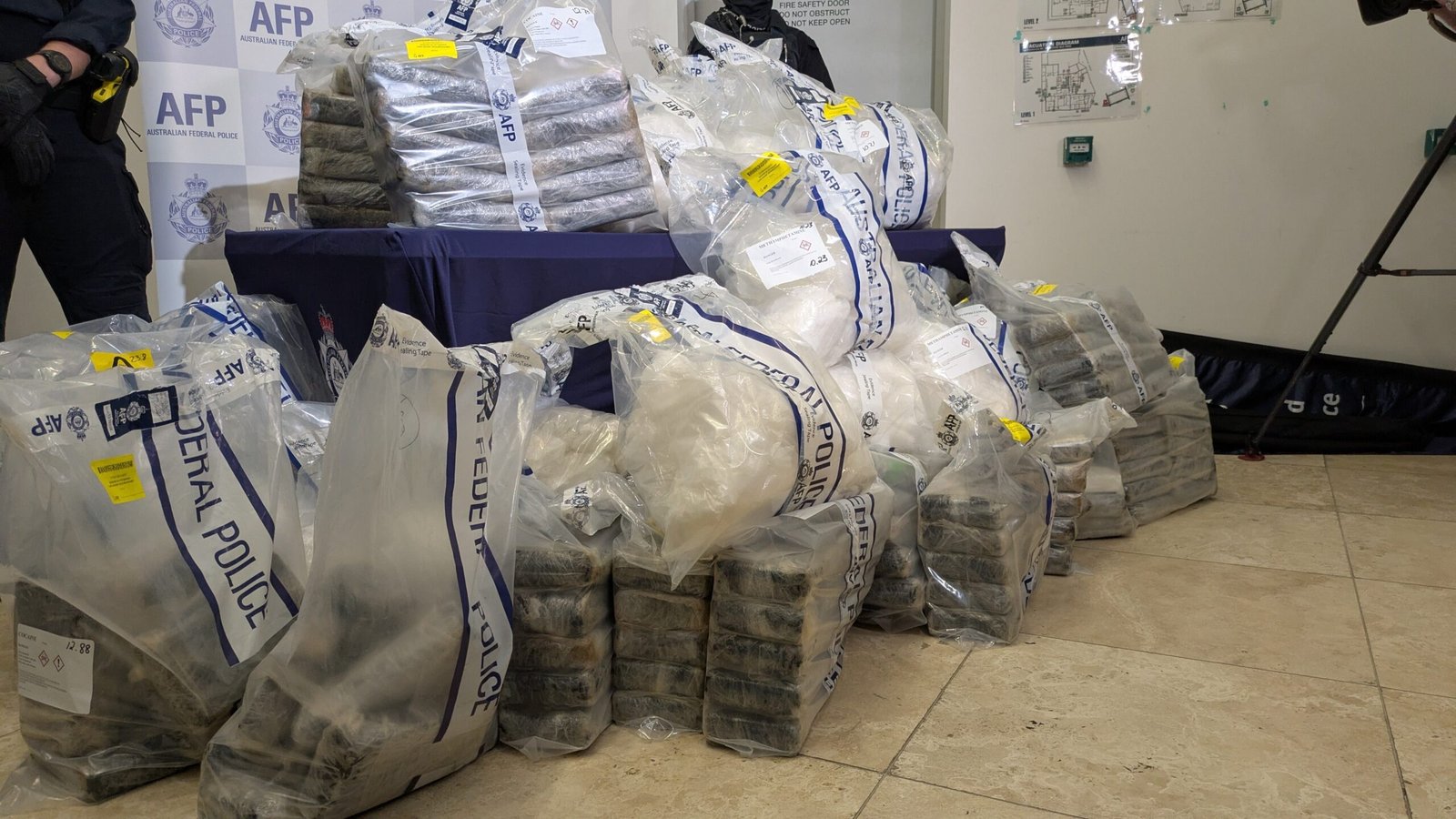
The proposed investment comes as drug seizures in Australia rise sharply. More than 17 tonnes of illicit cocaine and methamphetamine have been seized in the country so far this year, according to figures reported by the Australian Federal Police. That compares with 5.5 tonnes during 2025.
Earlier this year, the AFP characterised the growth in trafficking as a serious national security threat affecting both Australia and the wider Pacific. Australia’s comparatively lucrative illicit drug market gives international criminal organisations a powerful incentive to establish routes through island nations on the way to major cities including Sydney, Brisbane and Melbourne.
While many shipments are destined for Australia, Pacific communities can suffer severe consequences as drugs move through the region. Officials have raised concerns about addiction, violence, corruption and pressure on already stretched health and justice systems. The illicit trade has also been linked to serious public health problems, including Fiji’s HIV crisis.
Regional cooperation seen as essential
Albanese said closer cooperation was in Australia’s interests because the Pacific is the country’s “home and family”. The funding is intended to help governments share intelligence, improve maritime awareness and build the specialist capabilities needed to investigate organised crime across borders.
The distances involved make unilateral enforcement difficult. Traffickers can take advantage of isolated coastlines, limited surveillance capacity and multiple jurisdictions, while rapidly changing routes when authorities increase pressure in one location. A coordinated response could allow regional agencies to identify suspicious vessels sooner and act before shipments reach shore.
The announcement is expected during a politically charged Pacific Islands Forum gathering in Palau. Leaders are meeting in a formal plenary session before a private retreat, with regional security among several major issues on the agenda.
Focus shifts from seizures to supply networks
Large seizures remain important, but the proposed scheme reflects a broader effort to disrupt the organisations financing, transporting and distributing illegal drugs. Cooperation with source and transit countries could help investigators identify criminal networks before vessels enter Pacific waters.
Details about how the $600 million will be allocated among surveillance, training and other programs are expected to emerge as the initiative develops. Its effectiveness will ultimately depend on sustained cooperation, reliable intelligence sharing and the ability of local police services to convert additional resources into long-term enforcement capacity.
For Australia and its neighbours, the scale of this year’s seizures suggests the pressure is unlikely to ease quickly. The new investment represents an attempt to treat the trade as a shared regional security and public health problem rather than solely as a border-control issue.