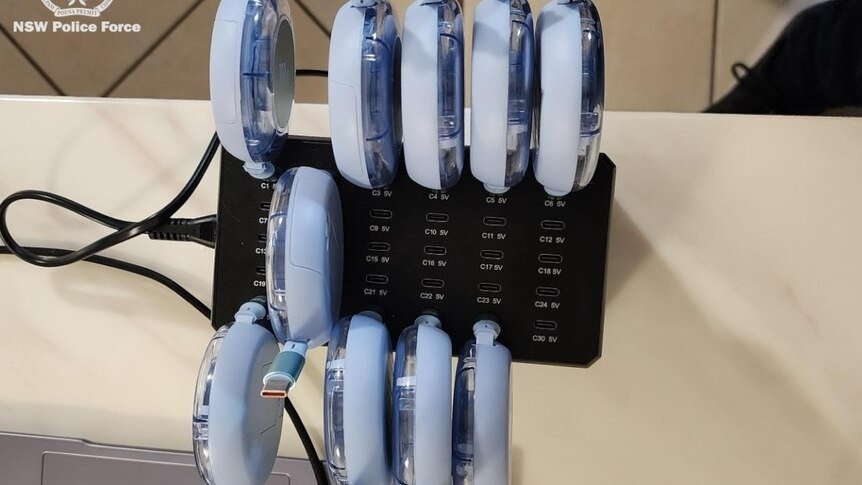
NSW Police say they have disrupted an encrypted phone supply network allegedly used by organised crime figures to arrange drug trafficking, kidnappings and other serious offences, after detectives infiltrated what was known as the “VIP Network” and sent a warning directly to users.
The operation, revealed after a series of raids in Sydney’s south, has placed renewed focus on how criminal groups use dedicated encrypted devices and closed messaging channels to keep their communications away from law enforcement. Police allege the network was not simply a messaging service, but a commercial enterprise that modified and distributed phones for use by serious offenders.
Police allege phones were tailored for criminal use
According to NSW Police, the devices linked to the VIP Network were imported from China and altered before being sold to users. Detectives allege the phones were fitted with international eSIMs, had hardware modified, and included encryption and remote-wiping tools designed to frustrate attempts at detection or evidence gathering.
Police say the alleged syndicate made an estimated $2 million from selling about 1,000 devices each year, with roughly 3,000 suspected to have been distributed across New South Wales. Investigators allege the phones became a communication lifeline for underworld groups, including people operating offshore who were seeking to coordinate criminal activity in Sydney.
The alleged uses cited by police include large-scale drug supply, kidnappings and murder plots. While encrypted communications are widely used lawfully by members of the public and businesses, police say this particular network was marketed and configured for organised criminal purposes.
Warning sent inside once-hidden chats
After gaining access to the environment used by the network, police sent a message into accounts connected to Signal or Threema, telling users that authorities had linked them with the VIP Phones supplier. The message warned that detectives from State Crime Command would continue to identify, investigate and prosecute people connected with the alleged criminal network.
Detective Superintendent Peter Faux, commander of the NSW Police organised crime squad, said police had already received mixed responses from people who received the message, including concern and attempts to justify why they had the devices. He said the operation was aimed at making users aware that law enforcement had identified the network and the alleged distributors behind it.
Police have described the investigation as an 18-month effort targeting suppliers of dedicated encrypted criminal communication devices. Over the past six months, detectives say they intercepted close to 100 devices linked to the network before carrying out raids that led to arrests.
Four men charged after Sydney raids
Three men aged 25, 26 and 29 were charged with participating in a criminal group and possessing dedicated encrypted criminal communication devices following Thursday morning raids. A fourth man, also aged 26, was later arrested and charged with multiple offences.
All four men appeared in court on Friday and were granted bail. The charges remain before the courts, and the allegations have not been tested.
Police say dismantling the distribution network has removed an important tool from groups seeking to coordinate violence and other serious offences without scrutiny. The case also highlights the broader challenge for investigators as organised crime adopts commercially supplied technology, offshore coordination and compartmentalised networks to distance senior figures from offences carried out on the ground.
The investigation is continuing, with NSW Police indicating that people who allegedly bought or used the devices may face further attention from State Crime Command detectives.