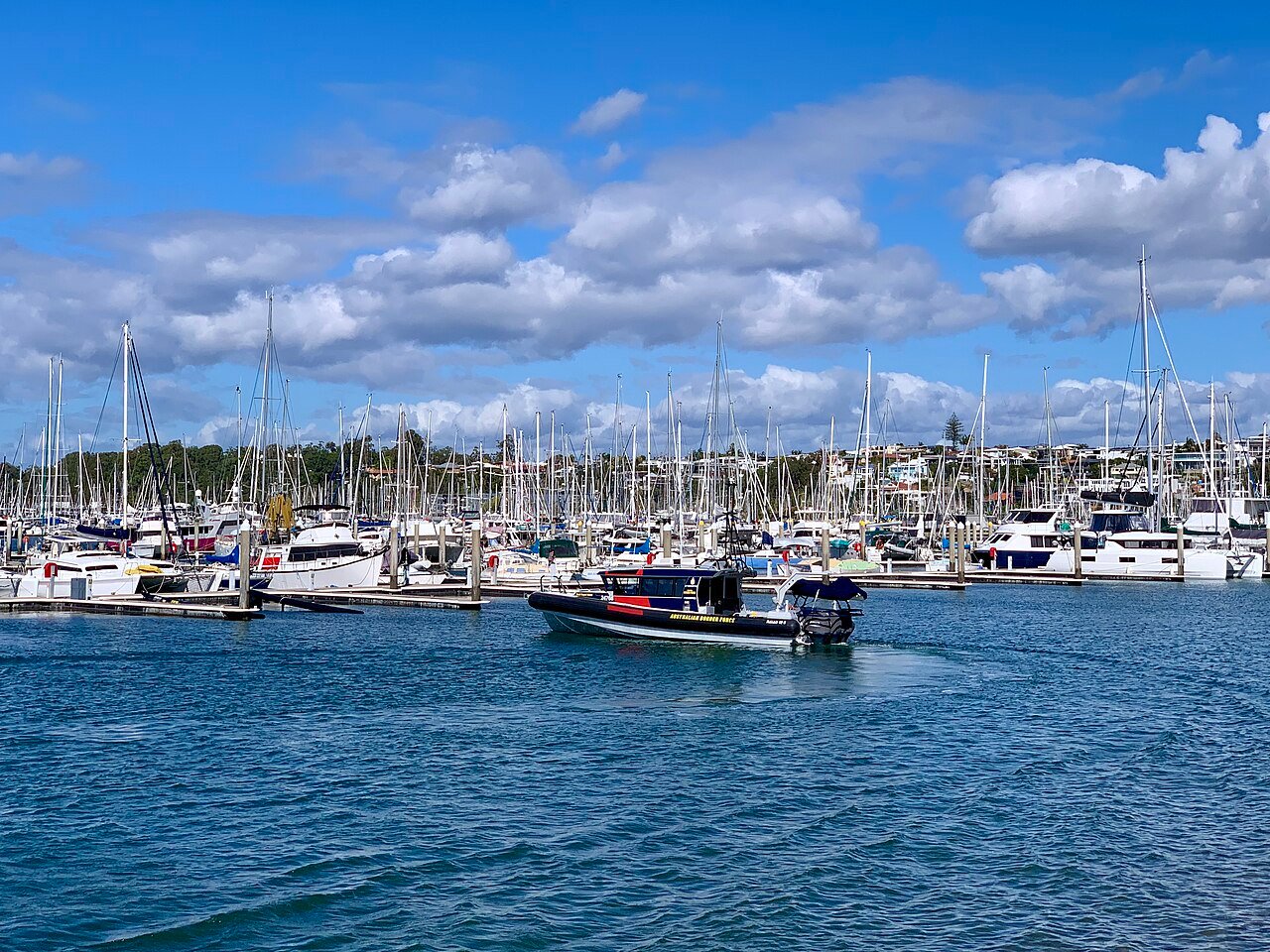
Two Men Charged After Boat Arrival in Far North Queensland
Two men have been charged after authorities allege a people smuggling operation brought at least a dozen Chinese nationals by boat to Weipa, a remote town on Queensland’s Cape York Peninsula. The case has drawn renewed attention to Australia’s northern coastline, where vast distances, small communities and limited infrastructure create ongoing challenges for police, border officials and local services.
According to public reporting on the matter, one accused man is Chein-Wen Peng, a 34-year-old Taiwanese national. A second man, identified as a 30-year-old Chinese national, has also been charged over allegations linked to facilitating the boat journey. Both men are expected to face further court proceedings, and the allegations remain before the courts.
The group of foreign nationals came ashore near Weipa earlier in the week, prompting a rapid response from Australian authorities. Home Affairs Minister Tony Burke told parliament that the arrivals had been removed from Australia by the following morning. Officials have not publicly detailed where the group was taken, but the incident has already become a focus of political debate over border security and the risks of organised people smuggling.
Remote Coastline Presents Enforcement Challenges
Weipa, with a population of about 4,000 people, sits on the Gulf of Carpentaria and is surrounded by remote coastline, waterways and sparsely populated country. Its isolation is part of the reason commentators have suggested it may have been targeted by smugglers seeking to avoid detection. Australia’s coastline stretches for about 34,000 kilometres, making maritime surveillance a complex task even with federal agencies, state police and defence assets working together.
Criminologist Dr Hai Luong, quoted by 7NEWS, said the incident highlighted a long-running border security challenge. Experts have noted that people smuggling networks may adjust routes, vessels and timing to exploit gaps in geography or enforcement capacity. In remote regions such as Cape York, the first report of an arrival can come from local residents, workers or police rather than a major port checkpoint.
The case is also significant because alleged maritime people smuggling arrivals are politically sensitive in Australia. Successive governments have promoted deterrence policies and offshore processing arrangements as central to preventing dangerous boat journeys. Any alleged breach can quickly become a test of both operational response and public confidence in border protection systems.
Political Pressure Over Border Operations
The Weipa arrival has prompted calls for expanded security measures in far north Queensland. Local Labor MP Matt Smith has publicly called for more funding and for Operation Broadstar, a border-focused operation in the Torres Strait region, to be extended into the Cape. His comments indicate that concern about maritime monitoring is not limited to the opposition, but is also being raised by representatives from affected communities.
Opposition figures have argued the incident shows people smugglers may attempt to test Australia’s border settings. Government MPs, meanwhile, have pointed to the speed of the response and the removal of the arrivals as evidence that enforcement measures remain effective. Both arguments are likely to continue while the court process unfolds and agencies review how the boat reached shore.
For communities in northern Australia, the immediate concern is practical as much as political. Local police and emergency services may be the first to respond to unexpected arrivals, even where the matter ultimately falls under federal immigration and border laws. The incident underlines the importance of coordination between Australian Border Force, federal police, Queensland authorities and local leaders.
Allegations Remain Before the Courts
The charges against the two accused men have not been tested in court. Any further details about the alleged planning, route, payment arrangements or involvement of organised networks will need to be established through evidence. Authorities have so far framed the matter as a serious alleged people smuggling operation, while one accused man reportedly denied knowledge of smuggling in court.
People smuggling offences can carry severe penalties, including lengthy prison terms where prosecutors prove that an accused person organised or facilitated the unlawful entry of non-citizens. The broader public interest in the case will be balanced against the need to preserve fair trial rights and avoid prejudicing proceedings.
As the case returns to court, investigators are expected to examine how the boat reached Weipa, who allegedly arranged the journey, and whether any wider network was involved. For now, the incident has placed a spotlight on Australia’s remote northern approaches and the continuing pressure on authorities to detect and disrupt maritime smuggling attempts before they reach land.